Rebuilding with words as our foundation
The identity of ‘Le Scuole’, a cultural venue born from the rubble
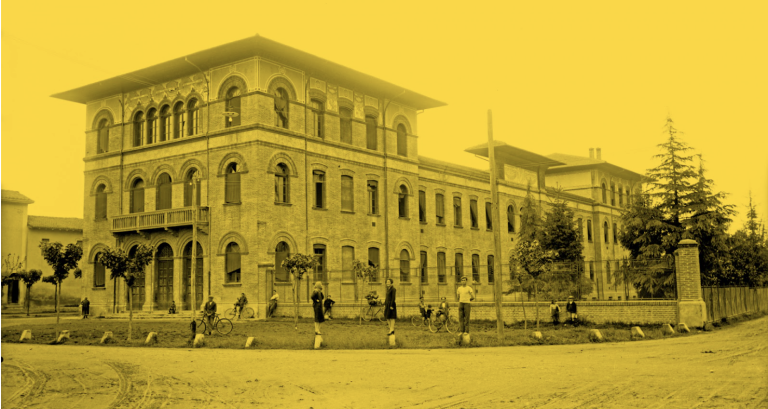


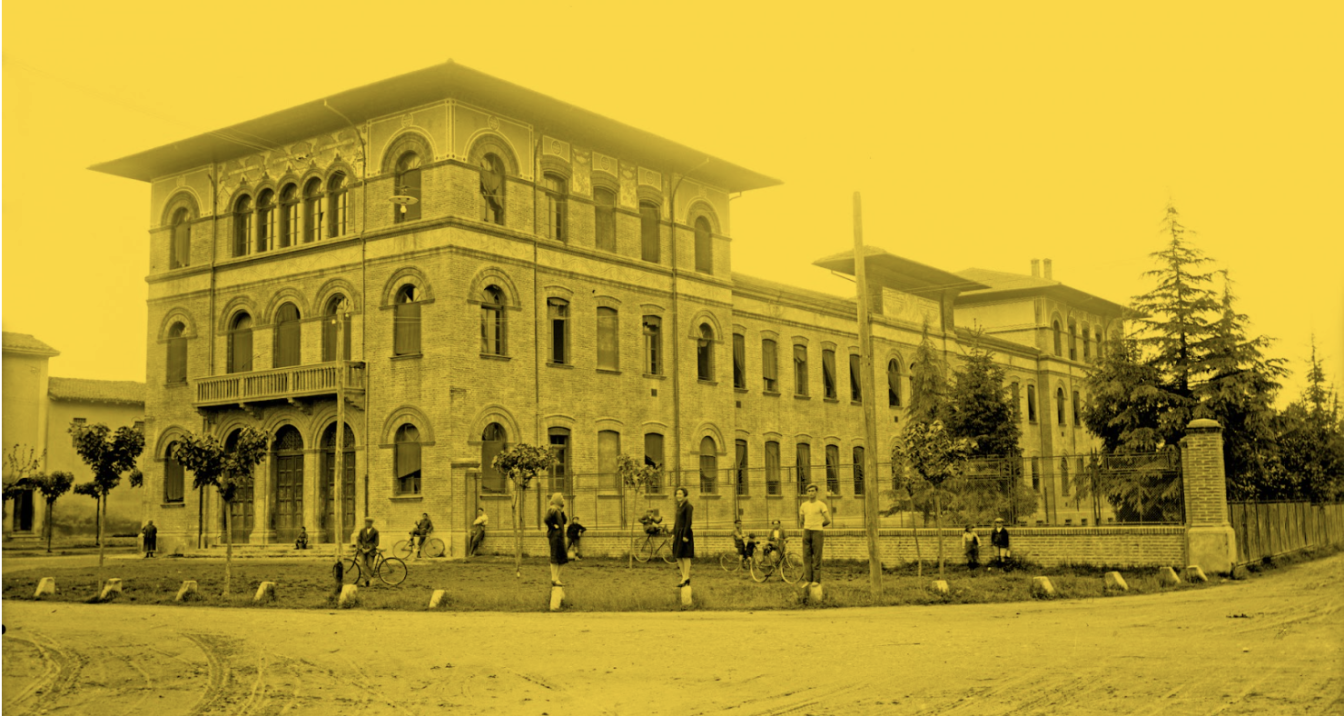
The 2012 earthquake severely damaged the primary school in Pieve di Cento (BO). The town sought to breathe new life into the building by restoring it to its role as a cultural venue and enhancing its original purpose as a centre of learning with new functions: today it houses a library and an art gallery.
Working closely with Tasca Studio Architetti, we designed its visual identity and architectural graphics.
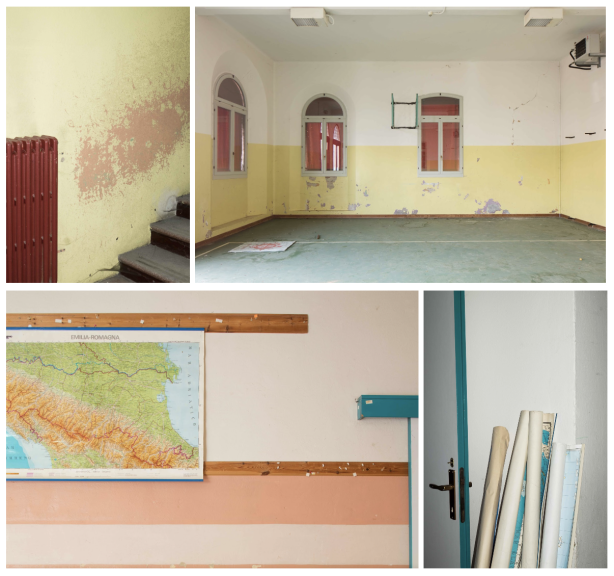
Memory, wound, rebirth:
Shaping the identity of Le Scuole
The challenges:
To represent the historical legacy and the future uses of the space.
To create a coherent and immediate association between the visual identity and the place.
To convey the project’s core principles and ethos.
To represent clear values.
To evoke powerful memories.
Names that endure. Among the ideas we gathered for the name of the new space, the one most closely linked to its historical legacy emerged: in Pieve, everyone knew it as ‘Le Scuole’. The term already conveyed an idea of knowledge, a pluralistic convergence of different thoughts and forms of learning. To accompany this name, we proposed the tagline ‘vedere sapere fare’ (see, know, do), which reveals its open, contemporary and multidisciplinary nature.
Walls that speak. The building’s external walls are adorned with decorations, probably dating from 1915, which are part of the Art Nouveau style associated with Aemilia Ars. Floral motifs frame Latin phrases extolling virtues: these are powerful mottos, consistent with the project’s objectives, maxims that remain relevant today for study, education and art. It was the genius loci that spoke to us – that complex of aspects firmly rooted in the place, its history and its function.
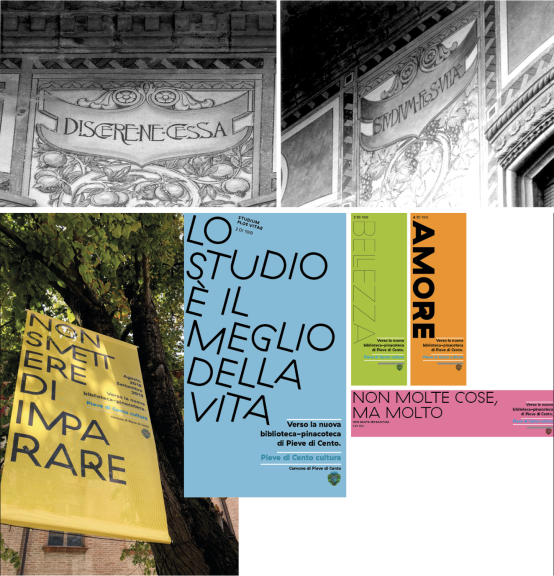
Forms of writing. These inscriptions reveal a script free from the constraints of letterpress printing, becoming an expression of the times, tailored to the space and its context. The glyphs connect and interact through ligatures, which inspired us to research their history and functions.
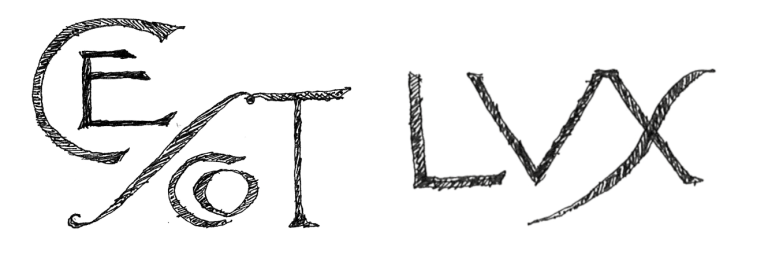
This approach to handwriting enabled us to create a new script with a contemporary vitality, one that did not descend into nostalgia or an escape into the future. A ‘regenerative’ use of the alphabet, now obsolete in schools, but not at Le Scuole. A need for adaptability to contexts, contemporaneity, practicality, diversity and the availability of forms has driven us towards the creation of a contemporary and enduring brand.


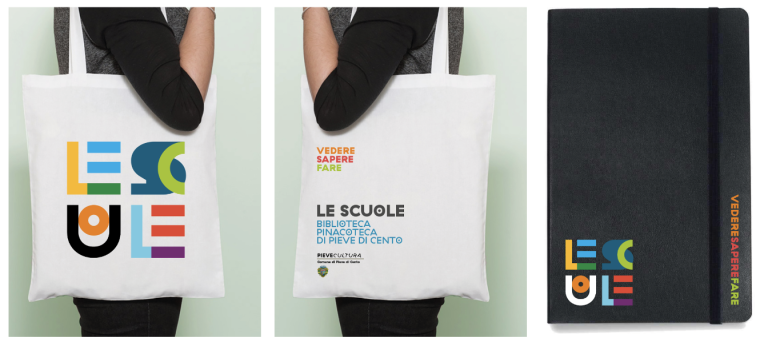
L as… E as… S as… C as… A series of glyphs assembled from basic shapes that can be broken down and rearranged expands into a complete alphabet: just as a human being is characterised by their handwriting, this is the expressive power that defines the entire project.
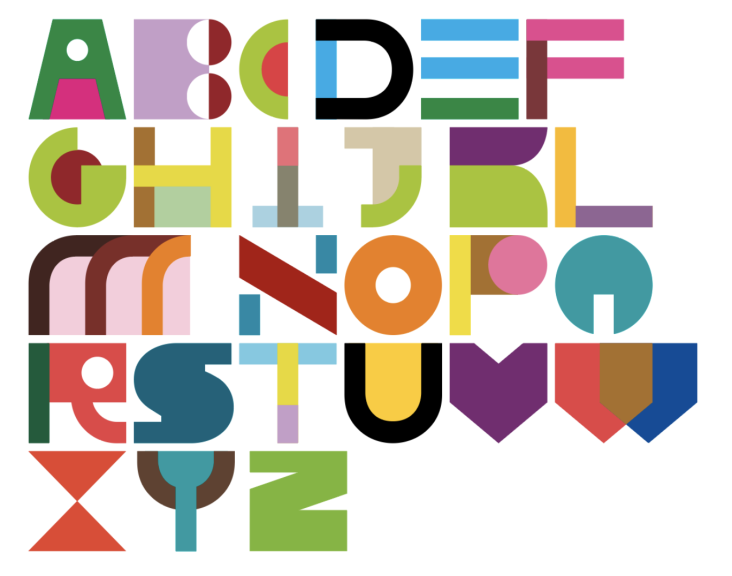
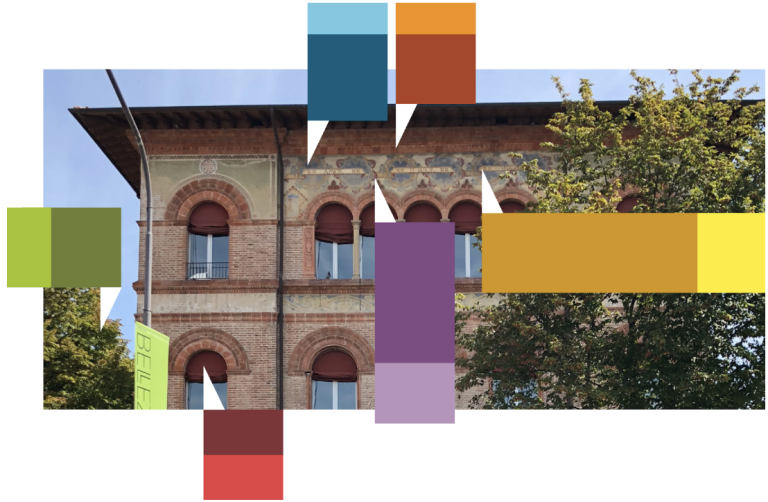
Colours. Colour, too, is a fundamental aspect of identity: by carefully analysing the walls, materials and context, we have identified six main shades and their corresponding brighter variants.
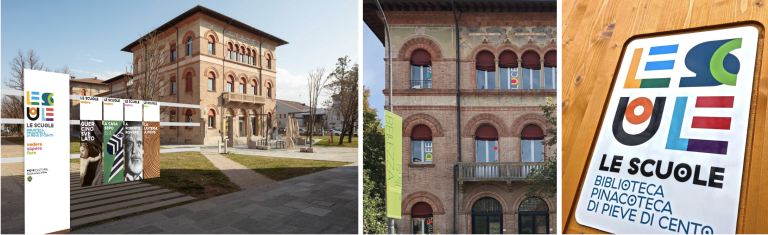
Inform. See, learn, do – exhibitions, talks, courses. Among our proposals to promote the activities of Le Scuole is a system of flags that keeps visitors updated on the cultural programme and serves as a natural guide to the content, visible even before entering.
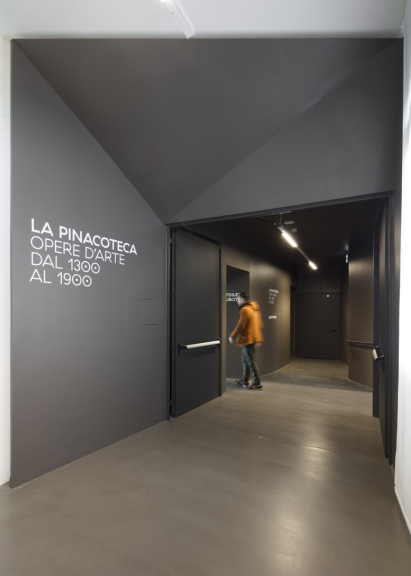
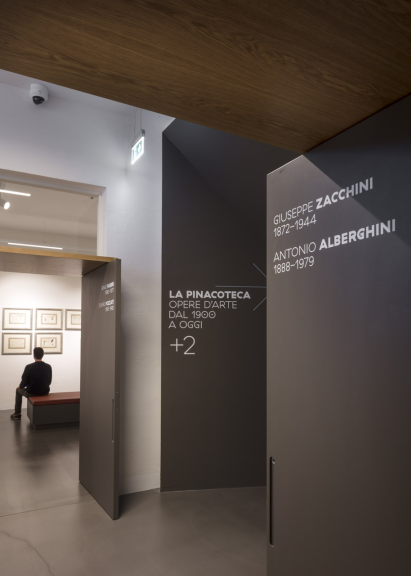







Guidance. Visitors walking through the building can find their way using essential signposts which, without detracting from the joy of discovery, allow them to build a mental map for future visits: arrows, notices, maps, colours, and quotations from writers and artists that guide them through the spaces and facilities…

Library
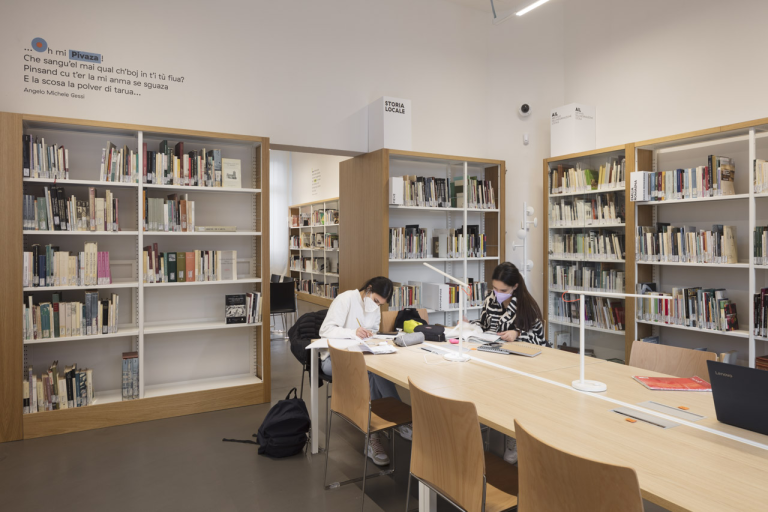
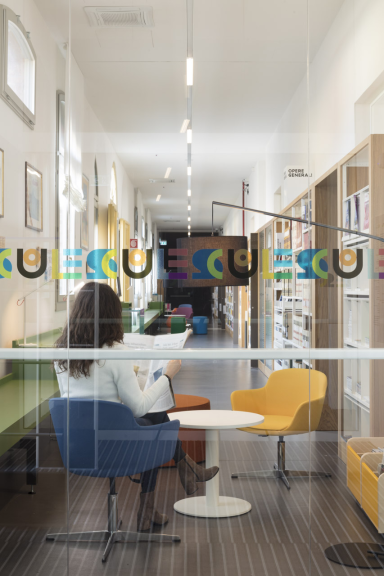

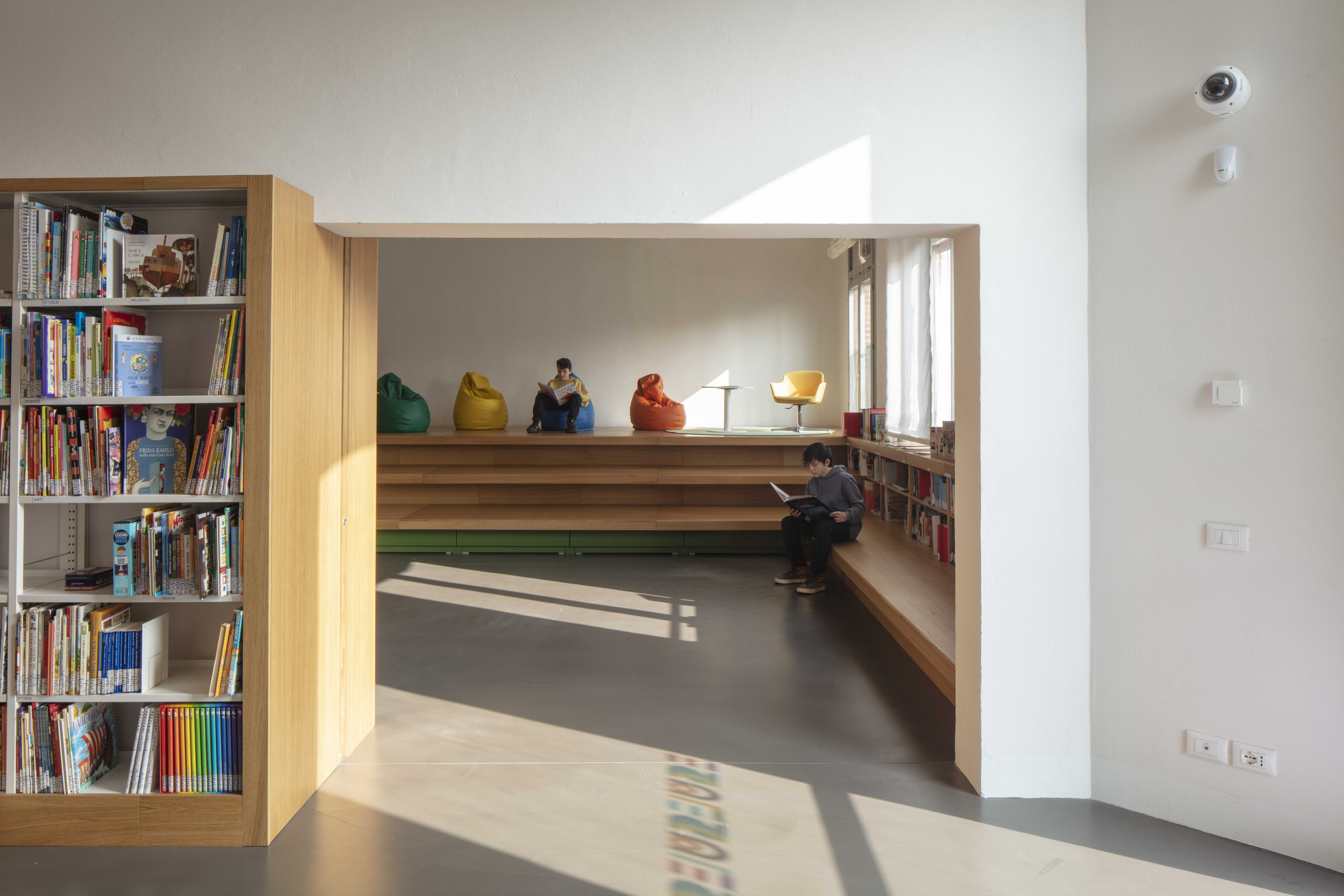



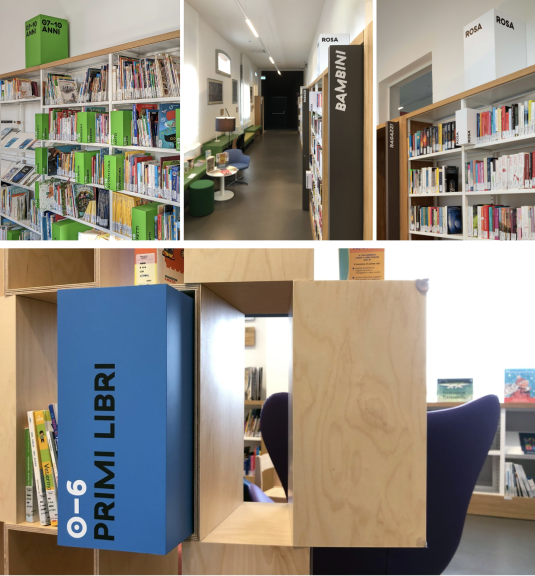
It includes areas for adults and children, as well as study and reading rooms. The shelving system translates the Dewey Decimal Classification into three simple, easy-to-navigate hierarchical levels: macro-area, theme, author.
Art Gallery
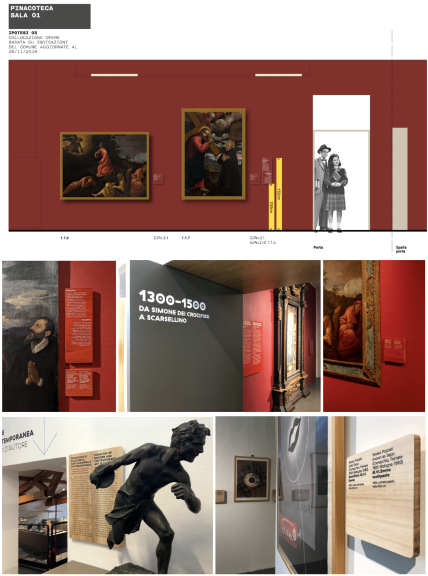


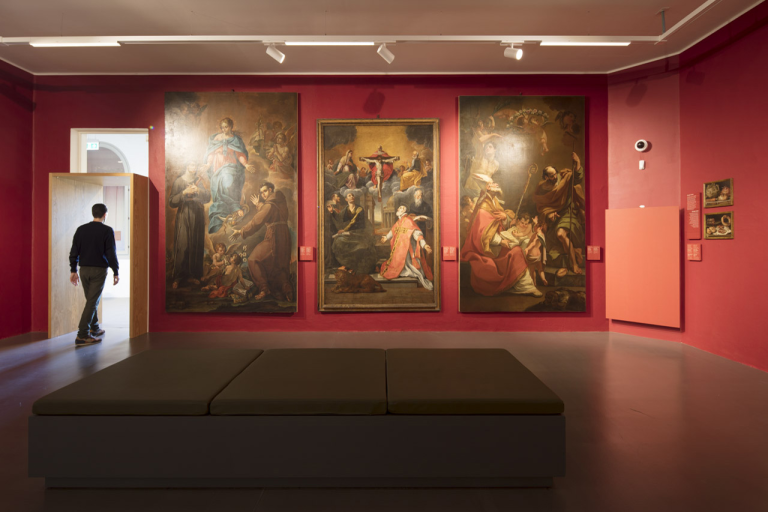
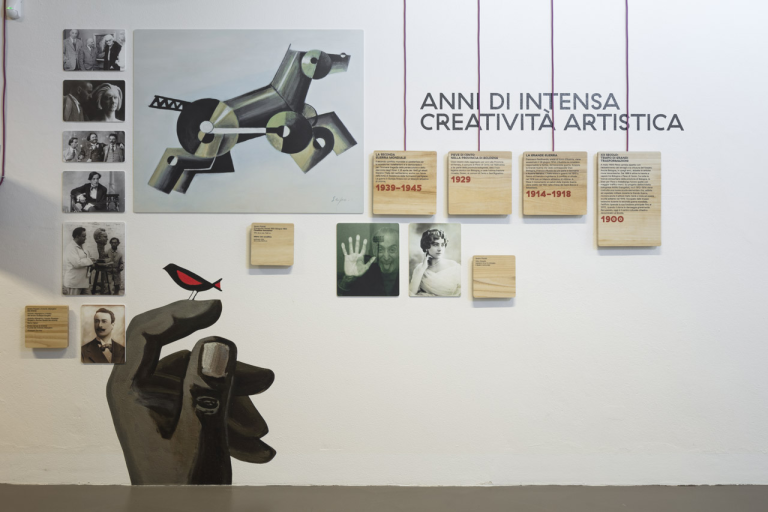
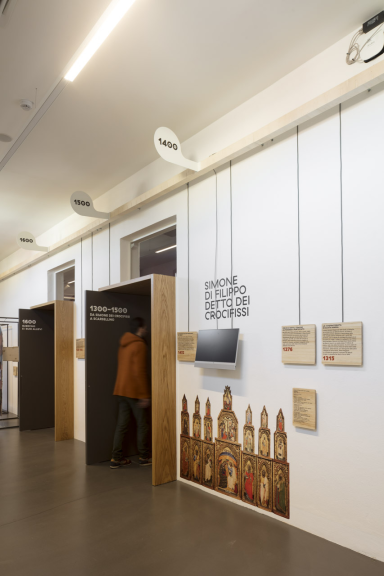


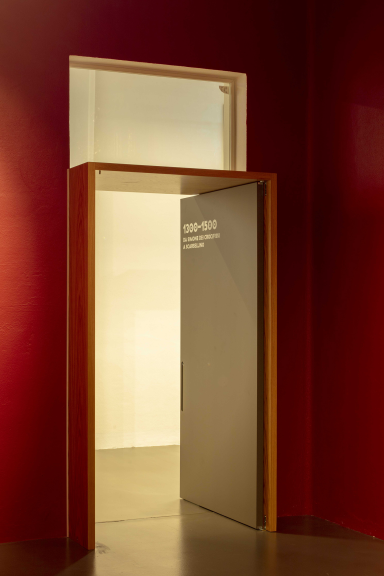
The art gallery resonates throughout the building with works of art that can also be found in the entrance hall, the study rooms and the library. Its heart, however, is the ‘Corridor of Art Through Time’: once leading pupils to their classrooms, today it traces the history of art in Pieve di Cento from 1300 to the present day. A timeline, known as the ‘regolo’, guides visitors through the galleries, introducing them to the exhibits via information organised into hierarchical levels: centuries, origins, contexts, artists and in-depth insights.
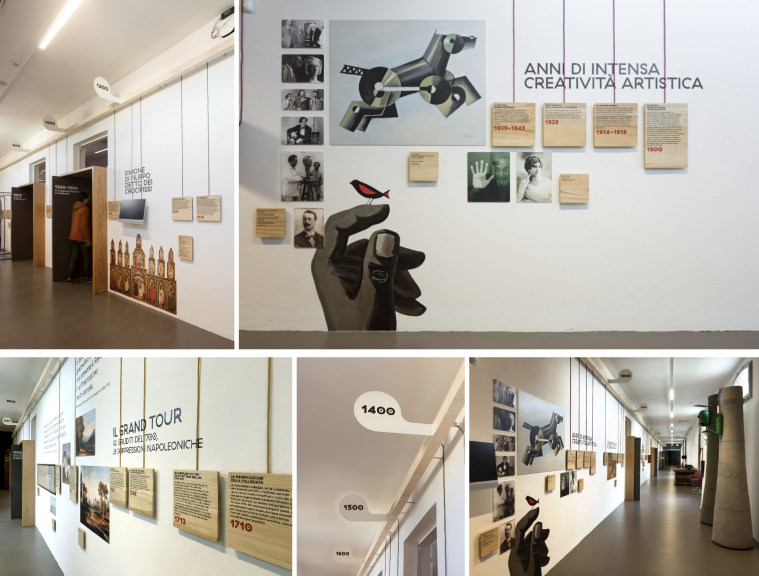
To add a hands-on element to the visit, we proposed dedicating a level of the timeline to cross-curricular educational activities spanning books and works of art, the library and the art gallery. Using a self-production system that is simple to manage, educational staff could create monographic itineraries to form the basis of workshops and activities. The ‘in-depth insights’ wall can be updated by visitors: this is where ‘Le Scuole’ becomes an active and direct experience.
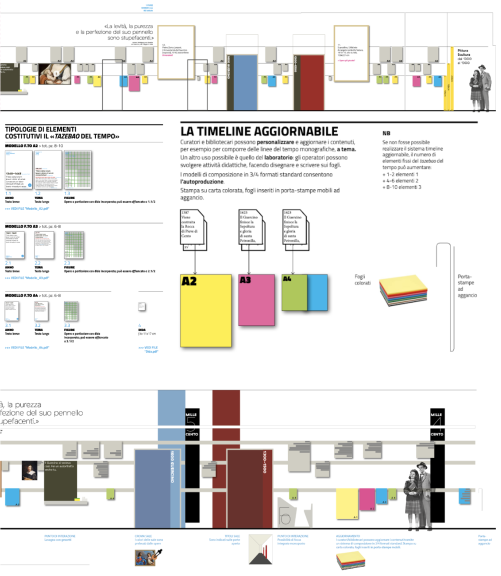
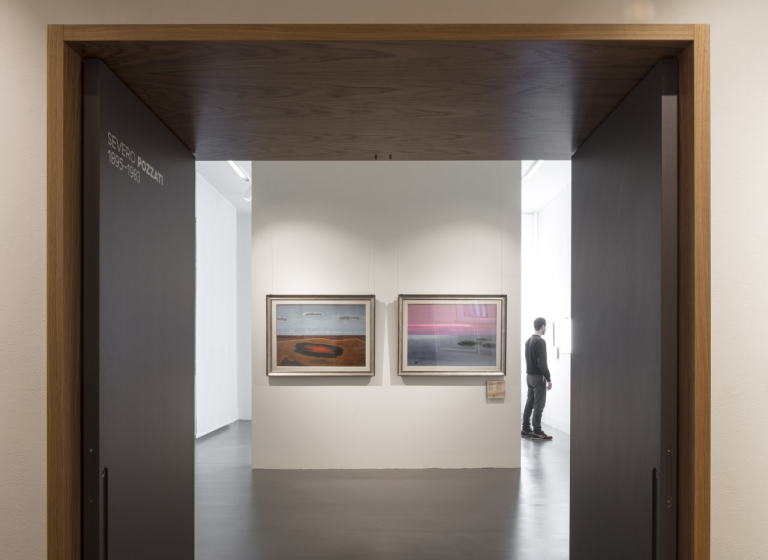
Those wishing to enjoy the artworks without too much preliminary information can go straight to the themed galleries, marked by entrance doors that are always open and distinguished by a specific background colour.